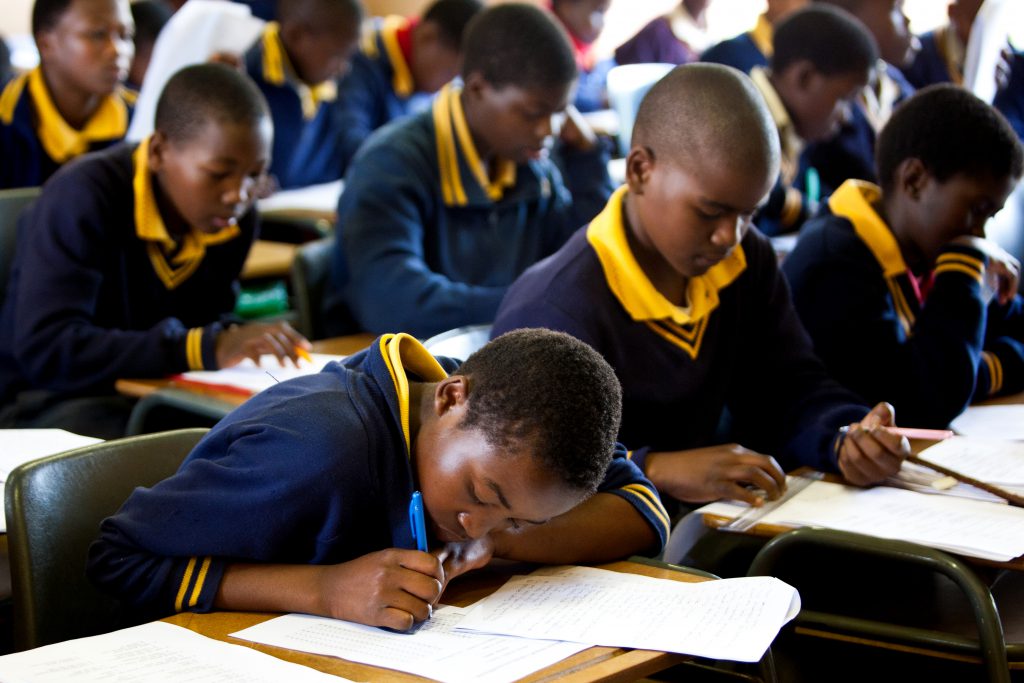
As Eswatini commemorates 40 years of national development under His Majesty King Mswati III, education is one of the sectors where the country’s progress is most visible moving from an era when many adults never accessed free primary schooling to a modern system now focused on curriculum reform, early learning, inclusion and digital readiness.
Over four decades, the education story has largely followed a clear arc: expanding access, reducing cost barriers for families, and then confronting a harder question whether schooling is translating into stronger learning outcomes and relevant skills for a changing economy.
Free primary education: the turning point for access
A major milestone came with the legal establishment of free primary schooling through the Free Primary Education Act of 2010, which formalised government’s obligation to remove school fee barriers at primary level.
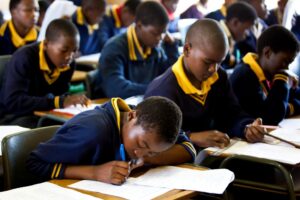
Sector analysis documents note that implementation began with Grade 1 in 2010 and was rolled out year-by-year to higher grades, reaching full primary coverage by 2015. The policy was designed not only to cover fees but to support key aspects of school operations that affect participation, such as basic running costs and school-level support systems.
This shift helped reposition primary schooling as a near-universal public good—changing household decisions in communities where cost had historically pushed children out of school early.
Early learning gains: bringing school readiness into focus
More recently, Eswatini has moved to strengthen the foundation years, including the introduction of Grade 0 in 2018, signalling a national push to improve school readiness and reduce early-grade repetition and dropout risks.
This emphasis aligns with education planning that increasingly recognises early childhood development as a key predictor of later performance particularly literacy and numeracy in the first years of primary school.
Signs of progress: completion and literacy indicators
While education performance is complex and varies by region and household circumstances, available indicators point to meaningful progress in participation and attainment. UNESCO’s education country brief for Eswatini reports high primary completion rates around the high-80s to low-90s for boys and girls in 2019 suggesting that most learners who enter primary school are now reaching the end of the cycle.
Adult literacy has also improved over time, with international datasets placing Eswatini’s adult literacy rate at roughly around 90% in recent years (with 2022 commonly cited near that level).
Building an education system fit for the next 40 years
With access gains established, national policy and planning now emphasise quality, inclusion and relevance. The Education Sector Strategic Plan (2022–2034) frames the next phase around improving learning outcomes, expanding participation at secondary level, and strengthening system efficiency such as reducing repetition and ensuring learners start school at the appropriate age.
Eswatini’s national reporting to international processes has also listed key milestones beyond free primary education, including the National Education and Training Sector Policy (2018), strengthened school health and protection programming, and targeted support for vulnerable learners through grants and care frameworks.
Curriculum reforms and skills for a changing economy
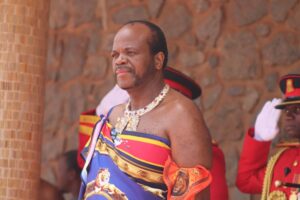
In 2026, the national direction has been explicit: education must produce the skills and competencies that match national development needs and global trends. In the Speech from the Throne, His Majesty highlighted ongoing curriculum reforms, calling for stakeholders to ensure they deliver targeted skills development, and emphasising teacher preparation as a make-or-break factor for successful implementation.
The same address connects education reform to a wider national push to transition “from analogue to digital,” a shift that has direct implications for schools connectivity, learning technologies, modern administration systems, and digital competencies for learners.
Education data and accountability: measuring what matters
Another part of modernising the system is improving education statistics and planning. Eswatini has continued to publish education monitoring reports, including recent national general education reporting that tracks enrolment structure and patterns across grades.
This kind of reporting matters because the next phase of progress depends less on building access alone and more on diagnosing where learning gaps persist by region, by school type, and by socio-economic status then directing resources accordingly.
The remaining challenge: learning outcomes, equity and resourcing
Despite progress, policy and research sources consistently caution that “schooling” does not automatically equal “learning,” and that system improvements must focus on classroom quality, teacher support, learning materials, and efficient financing.
Implementation realities also remain important, including ensuring timely resourcing to schools and strengthening the capacity required to manage reforms—especially in rural communities where educational disadvantage tends to be most persistent.
A 40-year story still being written
Eswatini’s education progress over the past 40 years is real and measurable, anchored by landmark policy shifts like free primary education and strengthened national planning. But the next chapter is clearly about quality, what learners can do with what they learn and whether the education system can deliver skills that match the country’s development ambitions in a digital era.